
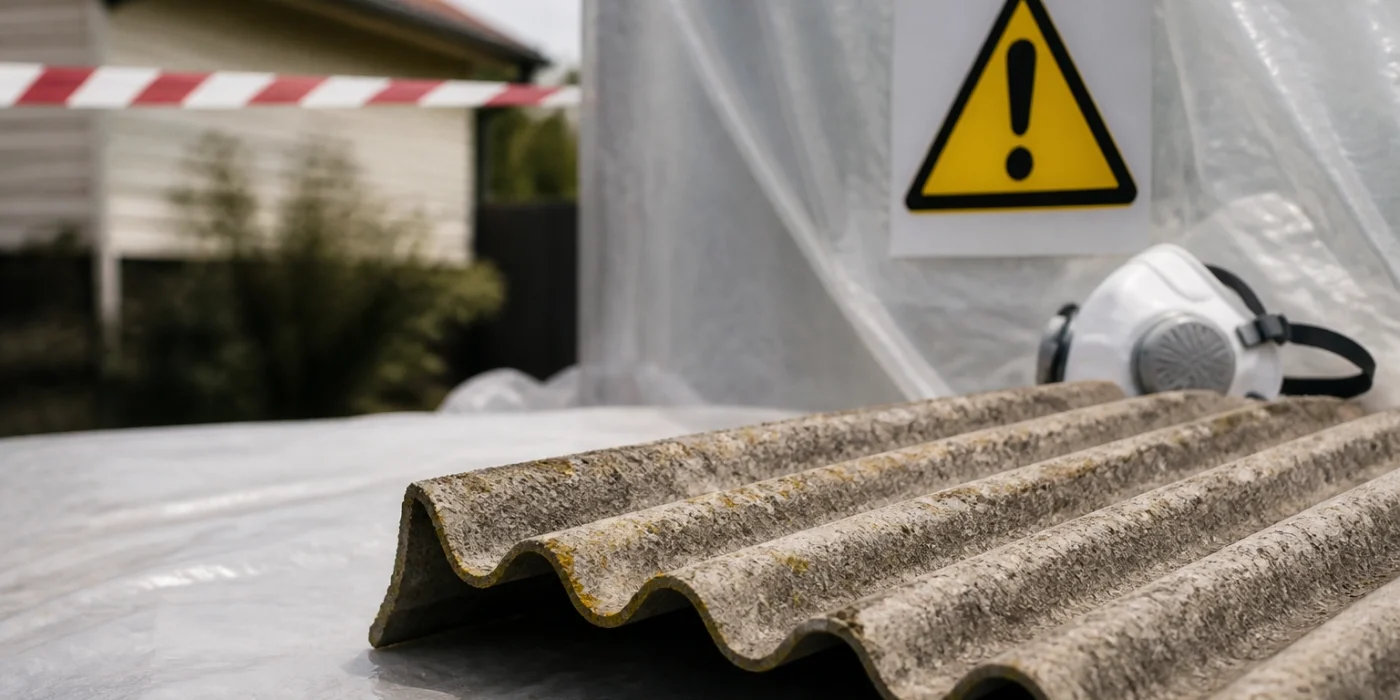
Finding out your property contains asbestos is unsettling enough. Then comes the question almost every Newcastle and NSW homeowner asks next: how much is this going to cost me?
The cost of asbestos removal in NSW is not a single fixed number. It shifts depending on what type of asbestos you have, how much of it exists, where it sits in the building, and whether the contractor you hire is actually doing the job properly. Prices range from around $30 per square metre for straightforward non-friable removal up to $150 per square metre or more for complex friable work, and the gap between a cheap quote and a compliant one can expose you to serious legal and health consequences.
This guide breaks down exactly what you are paying for, material by material and job by job. You will learn what drives costs up or down, what most quotes quietly leave out, what NSW law allows homeowners to do themselves, and how to assess a quote so you are not left paying twice. If you have never dealt with asbestos removal before, this is the clearest starting point available.
What You Are Actually Paying For: The Two Types of Asbestos
Before you can make sense of any asbestos removal quote, you need to understand the single variable that drives more price difference than anything else: what type of asbestos is actually present.
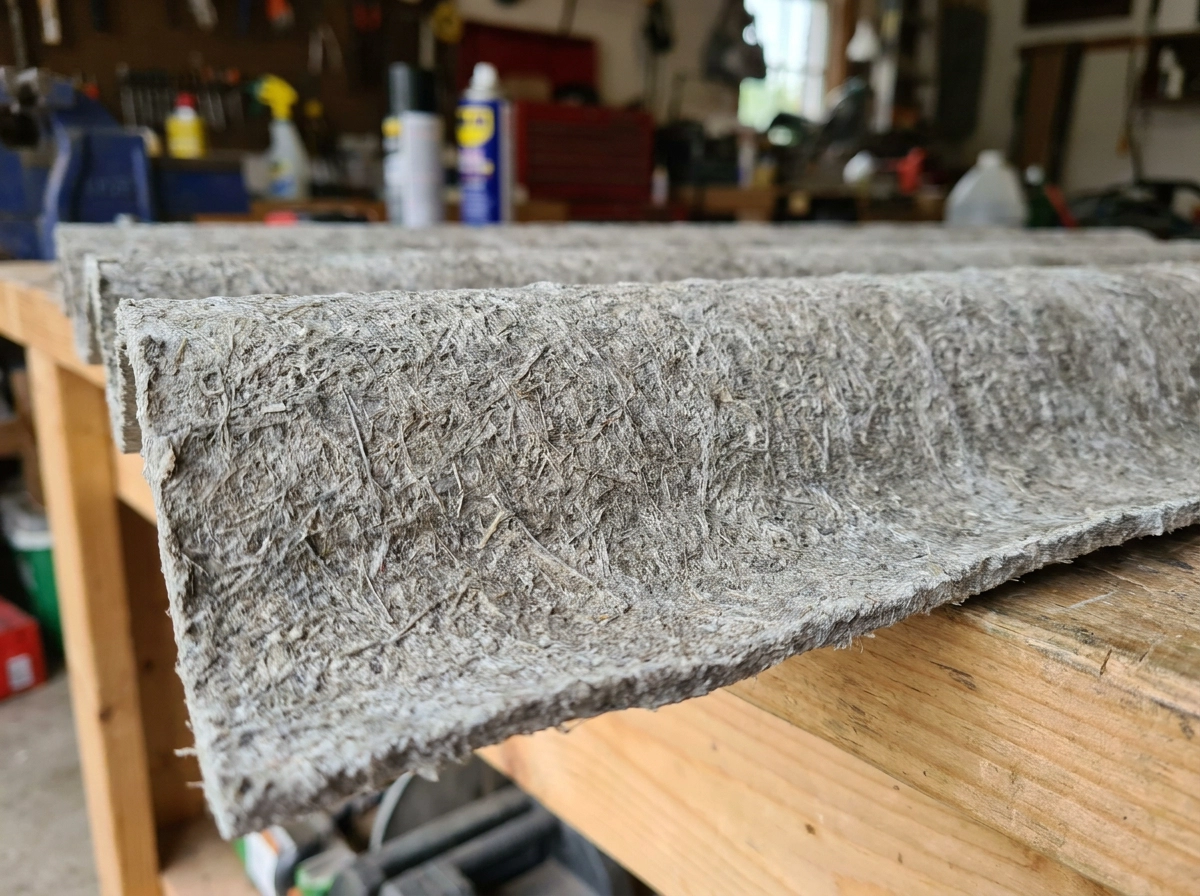
Non-friable (bonded) asbestos has its fibres locked into a solid matrix. Common examples include fibro cement sheeting, asbestos roof tiles, and vinyl floor tiles. These materials are relatively stable and only become hazardous when cut, drilled, or broken. Removal requires cordoning off the work area, wet-down procedures to suppress dust, basic PPE, and careful handling to avoid breakage. This is the material found in the majority of post-war Newcastle and Hunter Valley homes.
Friable asbestos is fundamentally different. The fibres are loose or easily crumbled, meaning they can become airborne with minimal disturbance. It is found in pipe insulation, old spray-applied coatings, deteriorating bonded materials, and loose-fill ceiling insulation, a product with particular relevance in licensed asbestos removal Newcastle contexts given its documented presence in NSW homes. Removing friable asbestos requires dust-tight plastic enclosures, negative pressure systems with HEPA filtration, personnel decontamination chambers, and continuous air monitoring. Under NSW regulations, any quantity of friable asbestos can only be removed by a licensed Class A removalist. There is no minimum threshold.
That regulatory and operational gap between the two types is why quotes for friable and non-friable work are not comparable figures, even when the square metreage is identical. A price that looks lower may simply be scoped for a different, less demanding class of work.
If you are not certain which type is present on your property, engage a licensed asbestos assessor before approaching any contractor. An assessor identifies and documents what is there, which class of removal it requires, and how much of it exists. That assessment prevents scope confusion and protects you from cost surprises once work begins.
Asbestos Removal Cost Per m2 in NSW: Material-by-Material Breakdown
Once you understand the friable versus non-friable distinction, the next question is straightforward: what does removal actually cost for each material type?
Nationally, asbestos removal pricing ranges from $30 to $150 per m2 depending on material type, job complexity, and location. Local disposal fees and labour rates vary by region and affect total cost.
Roofing is one of the most common removal scopes in Newcastle’s older housing stock. Large-volume roofing projects can reach $50 to $80 per m2 as mobilisation and containment costs are spread across more square metres. Smaller sections or difficult-access roofs command a significant premium; prices vary based on scope and access, and a site assessment is required for an accurate figure.
Ceiling removal pricing varies based on scope and access. The most critical variable is whether friable loose-fill insulation is present above the sheeting. If it is, the job is reclassified under higher-risk removal conditions, requiring significantly more complex containment. This is not a minor cost adjustment; it can shift a ceiling job substantially higher than a straightforward sheet removal.
Cladding splits into two categories. External and internal cladding prices vary based on scope and access; a site assessment is required for an accurate figure. Room-by-room internal cladding costs depend on size and the condition of the sheeting.
For linear-metre materials such as asbestos fencing and eaves removal, as well as vinyl flooring, indicative estimates vary and a site assessment is required for an accurate figure.
To translate these into real project estimates: a full external cladding removal on a typical fibro home in Newcastle or the Hunter Valley, and a full roof removal, both vary based on scope and access. Both figures are before disposal fees and air monitoring costs, which are covered separately in this guide.
Experienced asbestos workers will assess your specific materials and access conditions before confirming any figure, since the per-m2 rate is only the starting point of an accurate quote.
What Does a Full Asbestos Removal Job Cost in Newcastle?
Those per-material figures are useful for scoping individual items, but most Newcastle homeowners need to understand what an entire job adds up to.
For a standard residential project in NSW, full-home asbestos removal costs typically range from $1,500 to $10,000, with heavily contaminated or complex properties reaching $20,000 or more. That wide span reflects genuine differences in project scope, not just contractor pricing.
At the lower end sits the straightforward single-material job: a post-war fibro home in Newcastle with external wall sheeting on one storey, clear site access, and no complicating factors. That kind of scope is contained, predictable, and priced accordingly.
Multi-material jobs climb fast. Combine a roof removal, external cladding, eaves, and internal linings, and you are not just adding square metres. Each material type may require its own containment setup, a separate waste classification, and an additional disposal load. Those are discrete cost events that no per-m2 headline figure captures. A job quoted at a particular per-m2 rate for roofing alone tells you nothing about what happens when the removalist also needs to set up separate containment for deteriorating internal linings in the same visit.
For properties earmarked for demolition, this matters even more. In NSW, clearance certification is a standard requirement before demolition work begins; confirm the sequencing with your removalist and demolition contractor. That makes the removal cost a fixed line item in any knock-down-rebuild budget, not an optional consideration. A West Wallsend knock-down-and-rebuild project is a clear example of how pre-demolition asbestos removal fits into a combined scope.
Hunter Valley Group, Newcastle’s trusted demolition experts, works across both standalone removal projects and pre-demolition scopes throughout Newcastle and the Hunter region. Site-specific quotes account for the full removal and disposal scope, rather than per-m2 estimates that leave out the costs covered in the next section.
The Hidden Costs Most Quotes Leave Out
Understanding the full project cost means accounting for legitimate, unavoidable expenses that routinely disappear from headline quotes.
Disposal fees are a separate line item, not an inclusion. All asbestos waste in NSW must be double-wrapped in 200-micron polyethylene, labelled with the required danger warning, and transported to a licensed asbestos disposal facility. Disposal fees are a separate line item that varies by waste volume and facility; obtain a line-item cost from your contractor. The NSW Asbestos Waste Strategy explicitly acknowledges that disposal cost pressure drives illegal dumping, which is a persistent problem in this industry. A quote with no disposal line is a red flag, not a saving.
Air monitoring and clearance testing by an independent hygienist is legally required after all friable asbestos removal in NSW, and strongly recommended for any non-friable removal above 10 m2. Clearance certification and air monitoring are costed separately; confirm these are included or separately itemised in every quote.
Scaffolding and elevated work platform hire applies to any roof, eave, or upper-storey cladding removal. Depending on the property configuration, this adds several hundred to several thousand dollars to the job. None of it is captured in a per-m2 rate.
Containment setup covers polyethylene sheeting barriers, negative pressure systems for friable work, and worker decontamination units. These are legitimate labour and materials costs that must appear as explicit line items in any compliant quote.
A quote that bundles everything into a suspiciously low flat rate, omits disposal fees entirely, or makes no mention of clearance testing is almost certainly either planning to cut corners on disposal or underquoting to secure the job and recovering margin through variations later. Both outcomes cost you more in the end.
What Drives the Price Up or Down
Beyond the line items in your quote, five underlying variables determine where any job lands on the cost spectrum.
Material condition is the most consequential. Intact fibro sheeting is handled under a Class B licence. The same sheeting that has deteriorated, been previously disturbed, or is actively breaking apart may be reclassified as friable, triggering Class A licence requirements, stricter containment, and a substantially higher cost structure, as set out in the friable and non-friable section earlier in this guide. Two properties with visually similar material can carry very different price tags depending on condition alone.
Volume and scale work in the owner’s favour on larger jobs. Small or difficult-access jobs command a significant premium over large-volume rates, because mobilisation, containment, and disposal costs are spread across more square metres on bigger scopes. Staging removal across multiple contractor visits destroys this economy. Scoping the full removal in a single engagement is almost always the lower-cost approach.
Access difficulty translates directly into labour time and equipment hire. A single-storey fibro home with clear perimeter access is a straightforward set-up. A two-storey dwelling on a sloped Hunter Valley block requiring scaffolding on three faces is a materially different job, and the scaffolding hire alone can add thousands before a single sheet is touched.
Material variety on a single site compounds cost. Each distinct asbestos-containing material may require a different handling classification, a separate waste stream, and additional documentation under NSW regulations. A roof-only job is simpler and cheaper than a job combining roof, eaves, internal linings, and floor tiles.
Location within NSW affects disposal facility proximity, travel from the contractor base, and local labour rates. Newcastle and the Hunter Valley sit at a mid-range point on this spectrum; remote regional areas typically pay more, while dense metro areas carry their own cost pressures.
DIY vs Professional Removal: What NSW Law Actually Allows
Understanding the price variables only gets you so far. Before deciding whether to handle a small job yourself, you need to know exactly where the legal line sits in NSW, and what happens if you cross it.
The 10 m² rule explained. NSW law permits homeowners to remove non-friable (bonded) asbestos without a licence, provided the total area does not exceed 10 m². That allowance is real, but it carries strict conditions. You must follow Safe Work Australia’s guidelines, wear correct PPE, double-wrap and label all waste in heavy-duty polythene, and deliver it to a licensed asbestos disposal facility. SafeWork NSW goes further, explicitly recommending that homeowners use a licensed professional for any quantity of non-friable asbestos, regardless of what the law technically permits.
DIY removal within that 10 m² limit means materials and disposal costs vary depending on volume and your local licensed facility. What those costs do not capture is the price of getting it wrong. Incorrect disposal or an undisclosed asbestos disturbance discovered during a property sale can trigger remediation orders and fines that comfortably exceed the cost of professional removal.
As established earlier in this guide, any friable asbestos removal requires a licensed Class A removalist and any non-friable removal above 10 m² requires a Class B removalist at minimum, without exception under NSW law.
Non-compliant removal exposes you to WorkSafe NSW investigation, council enforcement action, liability for third-party contamination, and complications with property insurance claims or future sales. Each of these consequences carries a financial cost that dwarfs any saving made by avoiding professional fees.
The practical reality for Newcastle homeowners. The legal threshold of 10 m² rarely maps to real-world jobs. Roof sheeting, external cladding, and any material that requires cutting or breaking to remove all demand professional handling regardless of area. If the asbestos is above head height or bonded to a structural element, the risk profile of DIY is simply too high to justify the saving.
Is Free Asbestos Removal Available in NSW?
Given the professional and legal costs of non-compliant removal just covered, the question of whether any free or subsidised pathway exists is a practical one worth answering directly.
The short answer for most Newcastle and Hunter Valley homeowners is: no.
NSW has offered government-funded programs in the past, but they are narrow in scope. Past government-funded remediation programs in NSW have been narrow in scope and do not apply to standard fibro cement construction, which accounts for the overwhelming majority of asbestos found in Newcastle’s pre-1990 housing stock.
Some NSW local councils have periodically run free drop-off days for small quantities of bonded asbestos waste, typically limited to a few sheets per household. These initiatives change year to year and are not guaranteed. It is worth contacting the City of Newcastle or your relevant Hunter Valley council directly to ask whether any current program is active before assuming one exists.
The NSW Heads of Asbestos Coordination Authorities (HACA) and SafeWork NSW both maintain resources for residents, and state government hardship assistance channels may be available in specific circumstances, but these are not standard removal funding pathways.
For the vast majority of residential projects, the full cost falls to the property owner. Accurate budgeting and careful quote comparison are the only reliable tools you have.
One caution worth noting: if you encounter an operator offering removal at dramatically below-market rates or effectively at no cost, treat that as a warning sign rather than good fortune. Disposal fees are a separate line item that varies by waste volume and facility, and if that cost is not accounted for in the quote, it is being recovered somewhere. Companies like Hunter Valley Group, leading the way in demolitions in Newcastle and Sydney, provide fully documented disposal as a compliance baseline, which is what every quote you receive should also demonstrate.
How to Evaluate an Asbestos Removal Quote Without Getting Burned
Once you have decided to engage a contractor, the process of comparing quotes deserves the same rigour as the decision to remove asbestos in the first place.
Check the licence before discussing price. SafeWork NSW issues two classes of asbestos removal licence, and verifying the correct one costs you nothing. A Class B licence is required for non-friable removal above 10 m²; a Class A licence is required for any friable asbestos work, regardless of quantity. Class A holders are authorised for both. Both licence types are searchable on the SafeWork NSW licence register. If a contractor cannot supply a licence number before you go further, stop there.
Read every line of the quote. A compliant quote itemises removal labour, containment and setup, disposal fees including the name of the licensed disposal facility, and whether air monitoring and clearance certification are included or quoted separately. Any quote that rolls everything into a single figure with no breakdown makes it impossible to verify that each compliance obligation is properly costed. That is a red flag, not a bargain.
Compare on identical scope. A lower price that excludes disposal, uses minimal containment, or has not accounted for access difficulty is not the same job at a better rate. Check that each contractor has scoped the same materials, the same volume, and the same site conditions before placing figures side by side.
Ask about unexpected friable material. In older Newcastle homes, what looks like intact non-friable sheeting can conceal deteriorated or disturbed material beneath. Ask each contractor directly: what is your process if friable material is discovered mid-job? A professional operator will describe a documented reclassification and cost-adjustment procedure. A vague answer, or dismissal of the possibility, suggests a contractor who will either cut corners or deliver a large surprise invoice.
Verify compliance evidence in reviews. Check references specifically for asbestos removal work rather than general construction. Look for mentions of clearance certificates being issued and waste disposed of at licensed facilities. If you are scoping a larger project, speak to our commercial demolition experts to understand how asbestos removal and demolition sequencing is documented end to end.
Why the Cheapest Quote Is Often the Most Expensive Decision
Knowing what a compliant quote looks like is only half the equation. The other half is understanding what happens when you accept one that isn’t.
Illegal dumping is the primary mechanism by which some NSW operators undercut compliant competitors. A contractor who skips licensed disposal pockets that margin and passes the legal exposure directly to you. SafeWork NSW has documented cases of unlicensed demolition operators dumping tens of cubic metres of asbestos-containing material at rural properties, with the material traced back to the originating site.
That traceability is the critical point. If asbestos waste is linked to an illegal dump, the NSW EPA can issue a remediation order to the waste generator, not just the person who moved it. In a residential context, that is the property owner. You commissioned the work; the liability follows you, regardless of what the contractor did with the material after leaving your site.
The health risk compounds the legal one. Non-compliant removal that disturbs asbestos without correct containment can spread airborne fibres beyond the immediate work area into adjacent rooms, neighbouring properties, or roof cavities. Remediating secondary contamination of that kind routinely costs more than the original removal job would have if done properly.
Insurance is a further exposure most homeowners do not consider until it is too late. A property insurance claim involving asbestos disturbance carried out by an unlicensed contractor can be denied outright, leaving you fully exposed on a claim that proper process would have covered.
Hunter Valley Group is fully licensed and provides complete disposal documentation on every job. That is not a point of difference; it is the legal baseline every NSW removalist is required to meet. Verify it on the SafeWork NSW licence register before you sign anything, with any contractor.
After Removal: Clearance Certificates and What Comes Next
Once the contractor leaves the site, the job is not legally finished. A clearance certificate (also called a clearance inspection report) is the document that closes it out. It is issued by an independent licensed asbestos assessor, not the removalist, and it formally confirms the area is safe to reoccupy or reuse. For all friable asbestos removal in NSW, this certificate is a mandatory deliverable under the SafeWork NSW Code of Practice. The work cannot be signed off without it.
For non-friable removal, the legal requirement is less absolute, but the practical case for obtaining one remains strong. If the property is being sold, leased, or prepared for demolition, a clearance certificate provides documented evidence that the removal was completed correctly. Without it, that assurance exists only in someone’s word.
The certificate itself is preceded by air clearance testing. An independent hygienist collects air samples from the work area after visible removal and cleaning are complete. Those samples are analysed against the NSW regulatory threshold for residual fibre concentration. Only once the results come back within acceptable limits can the certificate be issued.
Clearance certification and air monitoring are costed separately; confirm these are included or separately itemised in every quote, and factor them into your project budget from day one. Critically, if a contractor discourages you from seeking independent clearance certification, treat that as a serious warning sign. Independence is the point: the assessor works for you, not for the removalist.
For projects that include demolition, the sequencing matters. Clearance certification is a standard requirement before demolition work begins; confirm the sequencing with your removalist and demolition contractor. Hunter Valley Group manages this directly, coordinating asbestos removal, clearance, and demolition as a single sequenced scope across Newcastle and the Hunter region, so nothing is left out of order.
Getting an Accurate Quote: Key Takeaways for Newcastle Homeowners
With clearance certification factored into your budget, you have everything you need to approach this project with clear eyes. Here is how to put it all together.
The per-m2 and per-job figures throughout this guide are starting points for budget planning, not final numbers. Every property is different. Material condition, access, volume, and site-specific disposal requirements all affect the final cost in ways that only a physical assessment can determine. Use the ranges to frame your expectations; rely on a licensed NSW removalist who has walked your site for an actual figure.
Confirm licence class on the SafeWork NSW register before comparing prices.
Once you have confirmed licences, check that every quote explicitly covers:
- Removal labour for the specific materials and volumes scoped
- Containment and setup appropriate to the material classification
- Disposal fees, including the name of the licensed disposal facility; these vary by waste volume and facility, so obtain a line-item cost from your contractor
- Air monitoring and clearance certification, or a clear statement that these are separately quoted
The cheapest quote is only cheap if it includes everything the job legally requires.
Hunter Valley Group provides fully licensed, fully documented asbestos removal across Newcastle and the Hunter Valley, for standalone removal projects and properties being prepared for demolition. Contact us directly for a site-specific quote that covers the complete scope.