
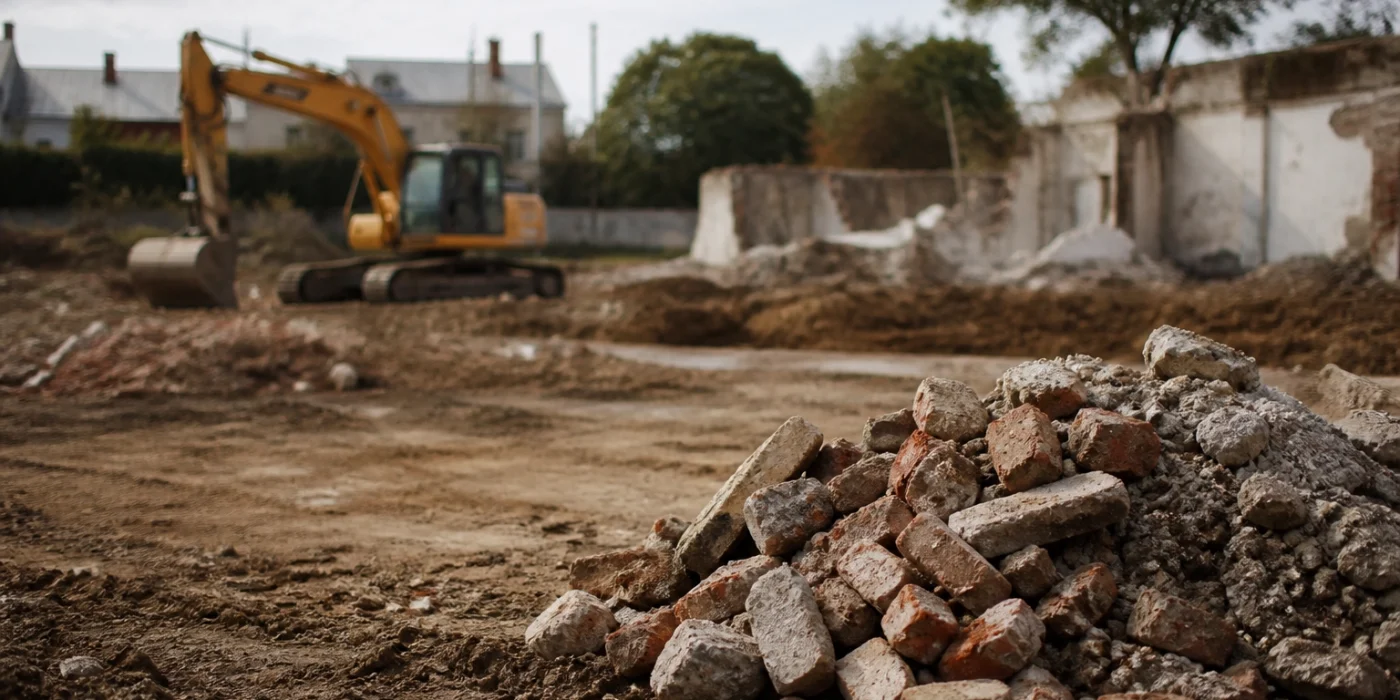
You have just knocked down an old building on your Newcastle property. The rubble is cleared, the site looks bare, and you are ready to build. But what if the ground beneath your feet is legally classified as contaminated? What if walking away at this point exposes you to serious legal liability?
This is where many property owners run into trouble. They assume site remediation is just another term for clearing and levelling land. It is not. Site remediation is a distinct, regulated process governed by NSW law, and under certain conditions, it becomes a legal obligation, not a choice.
In this guide, you will learn exactly what site remediation means, how it differs from standard earthmoving, and the specific scenarios that trigger a remediation requirement after demolition in Newcastle. You will also understand your legal duties if contamination is discovered, what the remediation process actually involves on a real site, and why choosing a contractor with both demolition and remediation capability can significantly affect your project timeline and legal standing. If you are planning a demolition, this information is essential reading before you break ground.
Site Remediation vs. Standard Earthmoving: Not the Same Thing
Standard earthworks services cover the movement, grading, and excavation of soil to prepare a site for construction. No contamination assessment is required by default. A contractor turns up, shifts earth to the specified grade, and the project moves forward. That is the full scope.
Site remediation is a different category entirely. Under the NSW Contaminated Land Management Act 1997, remediation is a legally defined process for identifying, containing, or removing hazardous substances from soil or groundwater until the site reaches a safe standard for its intended use. The Act establishes EPA oversight, formal investigation requirements, and in some cases site auditor certification. None of that applies to routine excavation work.
These two processes also sit on separate compliance pathways. Standard earthworks fall under ordinary development approval processes. Remediation triggers a distinct regulatory track governed by NSW contaminated land legislation and national environmental guidelines, specifically the National Environment Protection Measure for the Assessment of Site Contamination. Completing one does not satisfy the requirements of the other.
The practical consequences matter. A general excavation contractor is not automatically licensed or equipped to carry out remediation work. The scope, cost, and timeline of a project change significantly once contamination is confirmed, and those changes cannot be absorbed by simply instructing a standard earthmoving crew to dig deeper or haul more material away.
Property owners who treat remediation as interchangeable with earthmoving face real exposure. If contamination surfaces after construction begins and no assessment was conducted, the responsible parties face regulatory action and potential liability for any harm caused.
What Contaminated Land Actually Means Under NSW Law
So now that remediation is established as a legally distinct process, the next question is: what actually makes land “contaminated” in a legal sense?
Under the Contaminated Land Management Act 1997, land is contaminated when a substance is present at a concentration elevated above the normal level for the same locality and poses a risk to human health or the environment. Both conditions must apply: elevated concentration and risk.
Contamination is not confined to obvious pollution. The legal definition covers:
- Legacy industrial chemicals and solvents
- Petroleum hydrocarbons from fuel storage or spills
- Heavy metals such as lead, arsenic, and chromium
- Pesticides and herbicides from agricultural use
- Asbestos fibres distributed through soil during demolition or disturbance
None of these are necessarily visible at the surface.
The NSW EPA and the NEPM Assessment of Site Contamination guidelines set the national assessment standards applied in NSW. These determine whether contamination is present, and at what risk level, through a structured investigation and sampling process rather than visual inspection.
Groundwater adds a separate layer of complexity. Contamination can migrate below the surface and affect groundwater independently of what is happening in the soil above it. NSW EPA guidelines require separate groundwater assessment where this is suspected, which is not uncommon on older Newcastle sites near industrial areas.
Critically, a property owner does not need to see evidence of contamination for legal obligations to arise. If a formal assessment measures substance concentrations above the applicable guidelines, obligations apply immediately, regardless of whether anything looked wrong beforehand.
When a Newcastle Demolition Triggers a Remediation Requirement
Knowing what contaminated land is and knowing what triggers the legal obligation to remediate it are two different things. Several specific circumstances create that obligation for Newcastle property owners, and some arise before a single excavator moves soil.
Prior land use is the most consistent early trigger. Sites with a history of industrial, agricultural, or defence activity are associated with potentially contaminating activities listed in the NSW contaminated land planning guidelines. That history alone, without a current soil test, is sufficient to require further investigation before demolition and development can proceed.
Pre-1990 structures raise a separate, high-probability risk. Buildings constructed before 1990 are highly likely to contain asbestos materials. When demolition disturbs those materials into surrounding soil, the ground itself becomes asbestos-impacted, shifting scope from waste removal to contaminated land remediation. These are legally distinct processes with different compliance requirements. If your site involves a pre-1990 structure, licensed asbestos removal in Newcastle must be understood as potentially encompassing soil remediation, not just material removal.
Unexpected discoveries during excavation create an immediate stop obligation. Buried waste, underground storage tanks, or fill material of unknown origin found during Newcastle earthworks require contamination assessment before work continues. Proceeding without assessment is a direct regulatory breach.
Documentary evidence counts as a trigger, even without physical sampling. Aerial photographs, council records, or a history of the site operating as a service station, dry cleaner, tannery, or manufacturing plant are recognised grounds for requiring investigation under the planning guidelines.
The Section 149 Planning Certificate is the most overlooked pre-demolition step. Newcastle City Council issues this certificate documenting known or suspected contamination history attached to a property. Reviewing it before engaging a demolition contractor costs nothing and can prevent serious compliance exposure after work has already started.
Your obligations once a trigger is confirmed are set out in the next section.
Your Legal Obligations: The Duty to Report and What Happens If You Do Not
Once a trigger exists on your site, the law does not leave reporting to discretion.
Section 60 of the Contaminated Land Management Act 1997 requires any person who becomes aware of contamination that may pose a risk of harm to notify the NSW EPA. The duty extends to demolition contractors who uncover contamination, not only to property owners.
The penalties reflect how seriously the law treats non-reporting. Corporations face fines of up to $1,000,000 plus $77,000 for each day the offence continues. Individuals face up to $250,000 plus $33,000 per day. These are not administrative fines; they are prosecutable criminal penalties under the CLM Act. Critically, staying silent does not avoid remediation costs. The EPA can issue remediation cost recovery orders against responsible parties regardless of whether they self-reported, meaning non-disclosure compounds liability rather than reducing it.
Understanding your compliance pathway matters equally. Category 2 remediation work does not require Council development consent. However, Category 2 work must still satisfy applicable council requirements, and documentation of compliance is expected before and after remediation is completed.
If your site does not meet the Category 2 threshold, a full development consent pathway applies, which involves Council in the approval process and carries additional documentation obligations. Knowing which pathway applies before work begins determines who manages the process, what reports are required, and whether you can proceed without a development application.
What the Remediation Process Actually Involves on a Newcastle Site
Once you understand your legal obligations, the next question is practical: what does a compliant remediation process actually look like from start to finish?
It begins with a Preliminary Site Investigation (Phase 1), a desktop review of historical land use, aerial photography, council records, and site context. This establishes whether contamination is plausible before any soil is disturbed.
If Phase 1 identifies a credible risk, a Detailed Site Investigation (Phase 2) follows. Environmental consultants take physical soil and groundwater samples analysed against investigation levels set under the NEPM framework, confirming contamination and its extent.
Confirmed contamination triggers a Remedial Action Plan (RAP), specifying the cleanup method, treatment area and depth, and validation criteria. The RAP is calibrated to intended future use; a childcare centre requires a stricter standard than a car park.
Common remediation methods include:
- Excavation and off-site disposal: Contaminated soil is removed through licensed Newcastle waste management channels to an approved facility.
- In-situ treatment: Contamination is treated chemically or biologically in place, without full excavation.
- Containment capping: A barrier is installed over contaminated material where full removal is not practical.
Asbestos-impacted soil sits in its own category. It must be removed, double-bagged, and transported to a licensed disposal facility by a contractor holding both an asbestos removal licence and contaminated soil management authorisation. Standard earthmoving contractors are not qualified.
After cleanup, an independent consultant conducts post-remediation validation, confirming the site meets the agreed standard. That validation report is required before a development application or building approval can proceed. For property owners working with Newcastle’s trusted demolition experts, understanding this endpoint from the outset keeps project timelines realistic and avoids costly stops late in the process.
Why a Contractor with Demolition and Remediation Capability Changes Your Project
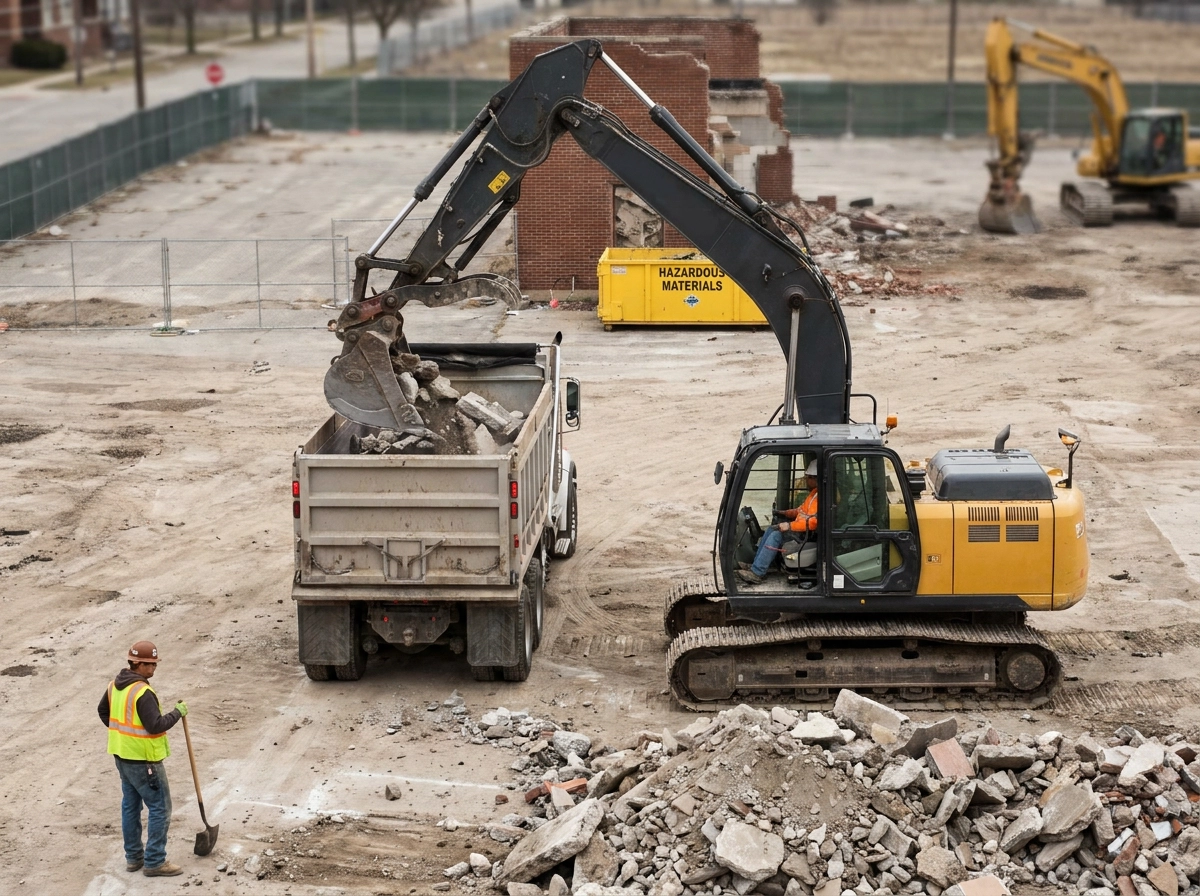
Knowing the remediation process is one thing; having a contractor who can execute it without breaking your project schedule is another entirely.
When demolition, asbestos removal, remediation, and earthworks are handled by separate contractors, liability for contamination discovered mid-project becomes fragmented quickly. Each contractor’s scope has a defined start and end point, and anything found outside those boundaries becomes a dispute over whose responsibility it is. That dispute costs time and money, and the site owner typically absorbs both.
A contractor holding demolition, asbestos removal, and earthmoving licences under one scope means contamination triggers can be managed without stopping the project clock.
There is also a site knowledge problem that fragmented procurement creates. The demolition contractor knows where the buried structures are, where fill material was uncovered, and where asbestos was concentrated. When a separate remediation contractor arrives from handover notes alone, that knowledge has to be reconstructed through formal investigation rather than direct observation, adding both cost and delay. For commercial and residential projects on tight development timelines in Newcastle, the difference between a multi-vendor approach and a single-source contractor can represent weeks lost across investigation, mobilisation, and validation phases.
Finally, waste disposal is not a matter of preference. Illegal dumping of contaminated soil is a separate offence under the Protection of the Environment Operations Act 1997, and liability for improper disposal traces back to the site owner as well as the contractor who carried out the work. Choosing a contractor with documented, licensed waste management processes is a legal requirement, not an optional quality standard.
Steps to Take Before Your Newcastle Demolition Starts
Knowing your contractor’s capability matters less if you have not first done the groundwork on your own property. Before any demolition begins, work through these steps in order.
Obtain your Section 149 Planning Certificate from Newcastle City Council before you engage anyone. This certificate records known or suspected contamination history and any restrictions attached to the land. If contamination is noted, remediation obligations may apply before a new build can proceed.
Search the NSW EPA’s Contaminated Land Record and council records for evidence of potentially contaminating activities on or adjacent to the site.
Commission a Phase 1 Preliminary Site Investigation if the history flags any of those land uses. Do this before demolition, not after excavation has already disturbed potential contamination. Discovering a problem mid-project is significantly more disruptive and costly than identifying it upfront.
Verify your contractor’s licences and obligations. Confirm they hold a current asbestos removal licence and understand their duty to report contamination under Section 60 of the Contaminated Land Management Act 1997. A licensed contractor who knows their reporting obligations will manage an unexpected find correctly rather than proceeding regardless.
Clarify scope in writing before signing anything. Ask directly whether contaminated soil management and licensed waste disposal are included, or whether a separate remediation specialist must be engaged. This single question can prevent significant cost and timeline surprises once work is underway.
Whether your project is residential or large-scale, speak to our residential demolition experts or speak to our commercial demolition experts to confirm what your site history requires before a single wall comes down.
Site Remediation Is a Legal Requirement, Not an Optional Upgrade
Once the pre-demolition steps outlined above are complete, one principle ties everything together: remediation is not a choice you make based on budget or preference. It is a legal obligation triggered by contamination, and that contamination does not wait for a convenient moment to reveal itself.
Contamination triggers identified in prior sections each carry the same outcome: a legal obligation to act.
The most effective way to manage that exposure is to engage a contractor whose licensed scope covers every stage where contamination can appear. Newcastle’s best residential demolition requires more than a wrecking crew when site history creates contamination risk. Hunter Valley Group holds the licences and integrated capability to manage demolition, asbestos removal, earthmoving, and contaminated soil disposal under a single accountable scope. That integration matters because contamination finds do not arrive on schedule. When the demolition contractor already holds asbestos removal and earthmoving capability, a find mid-project triggers an immediate, managed response rather than a procurement delay while you source a separate specialist.
Fragmented contractors mean fragmented liability, a point made concrete in the contractor section above.
Contact Hunter Valley Group before your next Newcastle demolition to confirm whether your site history warrants a contamination assessment.
Conclusion
Site remediation is not an afterthought. It is a legal obligation that applies the moment contamination is identified on a Newcastle property, and the consequences of ignoring it are serious.
Three points are worth carrying forward. First, contaminated land carries enforceable duties under NSW law regardless of how the contamination arrived. Second, demolition frequently uncovers what a visual inspection never could. Third, fragmented contractors create fragmented liability, and a single licensed scope is the cleaner, safer solution.
Knowing your site history before demolition begins is the most practical step you can take right now. A contamination assessment costs far less than an EPA enforcement order or a delayed project.
Contact Hunter Valley Group today to review your site history and confirm whether a contamination assessment belongs in your pre-demolition plan. The right preparation now protects your project, your budget, and your legal standing.